MUSIC
MUSIC
Gene’s music—eclectic, ambitious, and hard to classify—is part of a life-long search to discover fundamental truths through the arts.
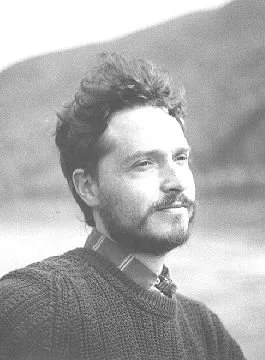
Best known for his opera Matter, Gene has also written a wide variety of music over the years, from classical instrumentals to quirky pop songs.
As a young man, Gene began with the kind of guitar-based folk songs common in the 1970s, pairing melody and lyrics.
Never a great instrumentalist, Gene soon discovered his true “axe”—the multi-track studio. He found that complex works could be created one simple track at a time—laying down a little guitar, some bass, backing vox, and so on. As the technology evolved, Gene’s vision of what was possible grew.
Albums of songs

Recording in various studios or with the latest home-studio technology, Gene released several albums in the medium of the day—cassette tapes, and later, CDs.
“Method in the Madness” was folk-rock based, with often melancholy, globally-conscious lyrics. “B-sides” and “4-Track Mind” introduced more complex chord changes and surrealistic imagery. Switching gears, Gene recorded a suite of pieces for solo piano. Gene’s experience leading tours through Europe yielded “Europe in 22 Minutes”—a musical journey from Amsterdam to Rome to Paris.
Gene’s style was becoming clearer: music that was largely acoustic, melody-based, with lyrics informed by poetry. Gene consciously turned away from the heavy drum-based industrial style.

Branching out— Matter
In the classical vein, Gene wrote a Sonata for Violin and Piano—a serious, complex 15-minute piece that was mastered, performed, and recorded by two talented musicians. Gene was commissioned to write incidental music for various avant-garde theatrical productions. Zig-zagging in another direction, many of his more whimsical songs were performed by the accomplished vocal group the “Cheeseweasels.” Gene’s next album, “Ballard Winter,” was considerably moodier.
All of these musical elements culminated in Gene’s ambitious opera, Matter. As a theatrical multi-media spectacle, it was a mix of music, theater, and the visual arts—involving acting, lighting, sets, costumes, poetry, story, and big themes. It told the story of a mysterious back-to-nature cult fighting to save their primeval way of life. The 2-hour opera unfolded in two acts—the first light, the second (spoiler alert) turning tragic. The music blended classical and more modern sounds, with dialog set to music. Most of all, Matter championed one of Gene’s life-long themes—living life as a journey of discovery.
After Matter, Gene produced less music and turned more to writing prose. It’s often asked whether Gene still writes music. As Gene himself said: “We’ll see.”

The Matter CD is Now Here
After 25 years, Archive Music has finally made the Matter soundtrack available on AMAZON.
It has 20 songs from the full-length opera, plus an 18-page insert with the story and lyrics.
“Unlike any show I’ve ever seen… The evocations of mystical experiences are extraordinary… Undeniable originality.” — Seattle Post-Intelligencer
Every week, you’ll find a new song from Gene’s catalog you can listen to and download free.
One week might be a folk song, the next a meditative solo piano piece or a Cheeseweasel deluxe. Most are written, produced, and performed by Gene. (Apologies to any uncredited musicians.)
The audio quality is, unfortunately, pretty Lo-Fi. These songs are quite old. Many were never anything more than rough demos, recorded quickly on the equipment of the day. Even the professionally-recorded masters often ended up on a fragile cassette tape stored in a musty basement. They’re faint remnants of another time.
But hey, they’re free. Enjoy.
Listen and Download
This week’s song (Oct 18-25)
Cheeseweasel Express
This is what started it all.
This was the theme song for a cabaret show starring the fictional pseudo-group “Chester and the Cheeseweasels.”
The show—a mix of sketch comedy, music, and absurdist theater—debuted at Seattle’s oldest bar, the Merchants Café, in Pioneer Square.
“As I recall,” wrote Gene, “my original song was something like ‘The Dalí Express.’ It had lyrics describing the kind of Surrealistic images you might see on the eponymous train ride.”
“But once the troupe got hold of it, we rewrote the song to match the show we were hatching.”
Needless to say, this was the first shot in what became a vast, glorious, worldwide Weasel Empire.
The Cheeseweasels: actor Floyd Van Buskirk (doing the spoken intro), improv master Scott Creighton (lead vocal), playwright Lee Strucker, and Gene.